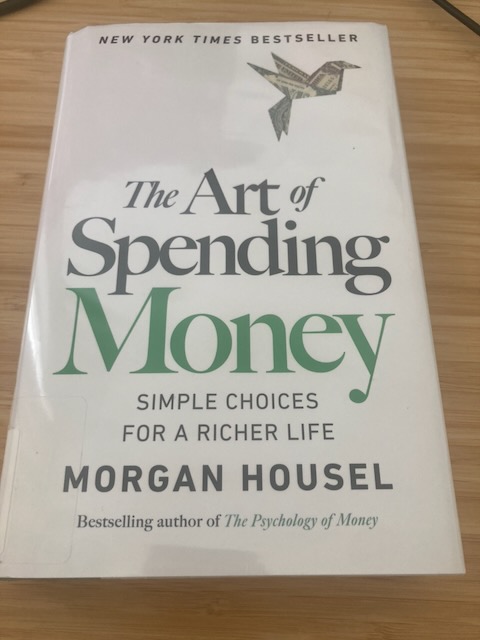
Book of the Week: The Art of Spending Money
23 May 2026
I read The Art of Spending Money written by Morgan Housel, who wrote The Psychology of Money.
Spending money is really about buying happiness. Basic factors for happiness according to Carl Jung
- Good physical and mental health
- Good personal and intimate relationships, such as those of marriage, the family, and friendships.
- The faculty for perceiving beauty in art and nature.
- Reasonable standards of living and satisfactory work.
- A philosophic or religious point of view capable of coping successfully with the vicissitudes of life.
I wanted to learn more about how to spend money since I have previously spent a lot of time learning how to save money. I also read Die with Zero. To get to zero, you need to spend money.
When faced with the question, “How much money would you need to be happy?”, the answer is usually about twice as much as you currently make / have. That is a never ending thing, like saying you’ll do something tomorrow. Tomorrow never comes.
When people spend money, they either spend it for utility (Toyota) or status (BMW). When I was a graduate student, I wanted to buy a BMW as soon as I got a job. I couldn’t bring myself to buy one since it wasn’t worth all those hours of work I put it for the money. Some people say to buy utility and rent luxury. Drive a reliable Japanese car, but rent a Ferrari for the weekend to have fun. It will work out better economically for you unless the Ferrari appreciates a lot.
Daniel Kahneman once said an important part of becoming good with money was having a well-calibrated sense of your future regret. The book mentions Jeff Bezos’ regret minimization framework for deciding what to do in life. Near death, people regret what they didn’t do rather than the things they have done. When you’re old, you only have your memories to reflect upon. This leads people to saying for happiness it is better to spend money on experiences rather than things.
Consideration on spending is dependent on two factors
- Compounding interest
- The fact that you are one day closer to death than you were yesterday
When you have high returns, it makes the thing you are spending on now, much more expensive. A dollar today, could be 2 dollars in 10 years or 8 dollars in 30 years. Is what you are buying now worth $8? If your returns are higher, it gets even more expensive. The book is not a guide on how to spend money, it is about how to think about spending money. Why spending money may not necessarily get you the happiness you were looking for.